

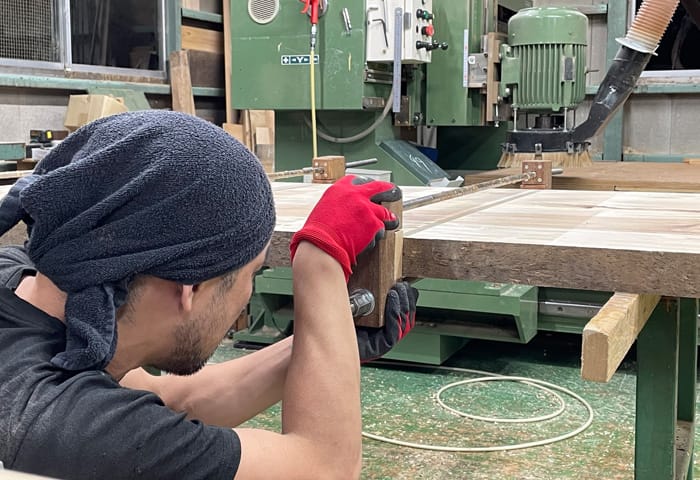
Hida furniture has long been a cornerstone of Japan’s furniture industry, acclaimed for its design, functionality, and durability.
In particular, solid wood furniture gains character and charm over the decades—it becomes so integral to your daily life that it feels like part of the family. Today, we’d like to show you how this kind of “lifetime furniture” comes to be, following each step of Hida’s all-inclusive process, from selecting the wood to the final finishing.
1. The Hida Approach to Furniture Making
The Hida region is celebrated not only for its abundant forest resources but also for its centuries-old woodworking expertise.
Generations of accumulated knowledge and skill enable the creation of designs that are simple yet profoundly appealing, with an end result that’s both sturdy and beautiful. One of the charms of Hida furniture is that it embraces each piece of wood’s individual character, letting you enjoy the natural variety of wood grain and color.
2. Wood Selection
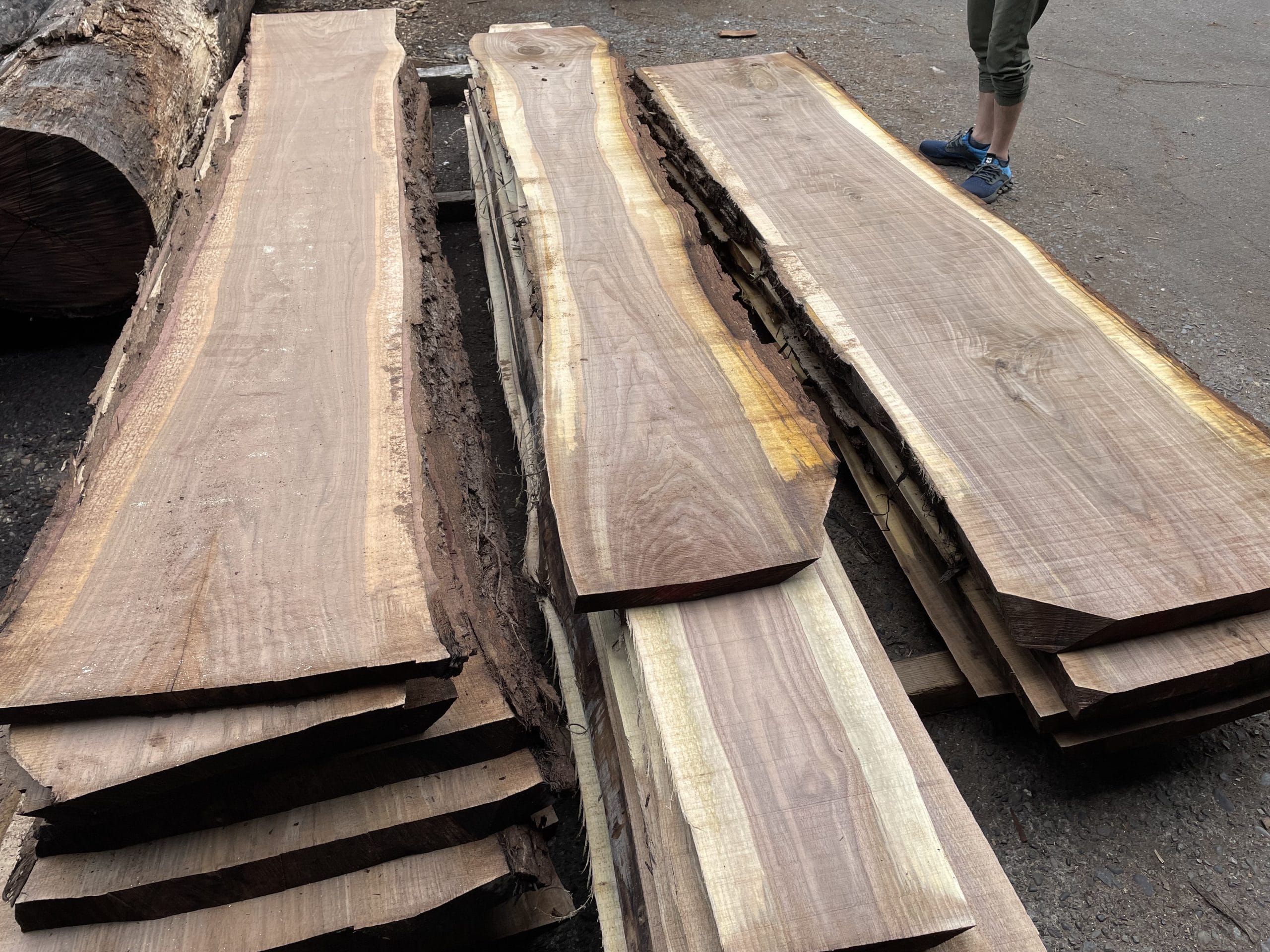
The first—and crucial—step is “wood selection.”
We source materials, sometimes in log form, from trusted lumber suppliers we’ve worked with for many years.
Here, each piece of wood undergoes a rigorous inspection. We carefully check size, wood quality, knots, warping, and moisture content by hand and eye. Only pieces that meet our mentor’s strict standards make it to production. Out of dozens—or even hundreds—of boards, only a few might pass inspection.
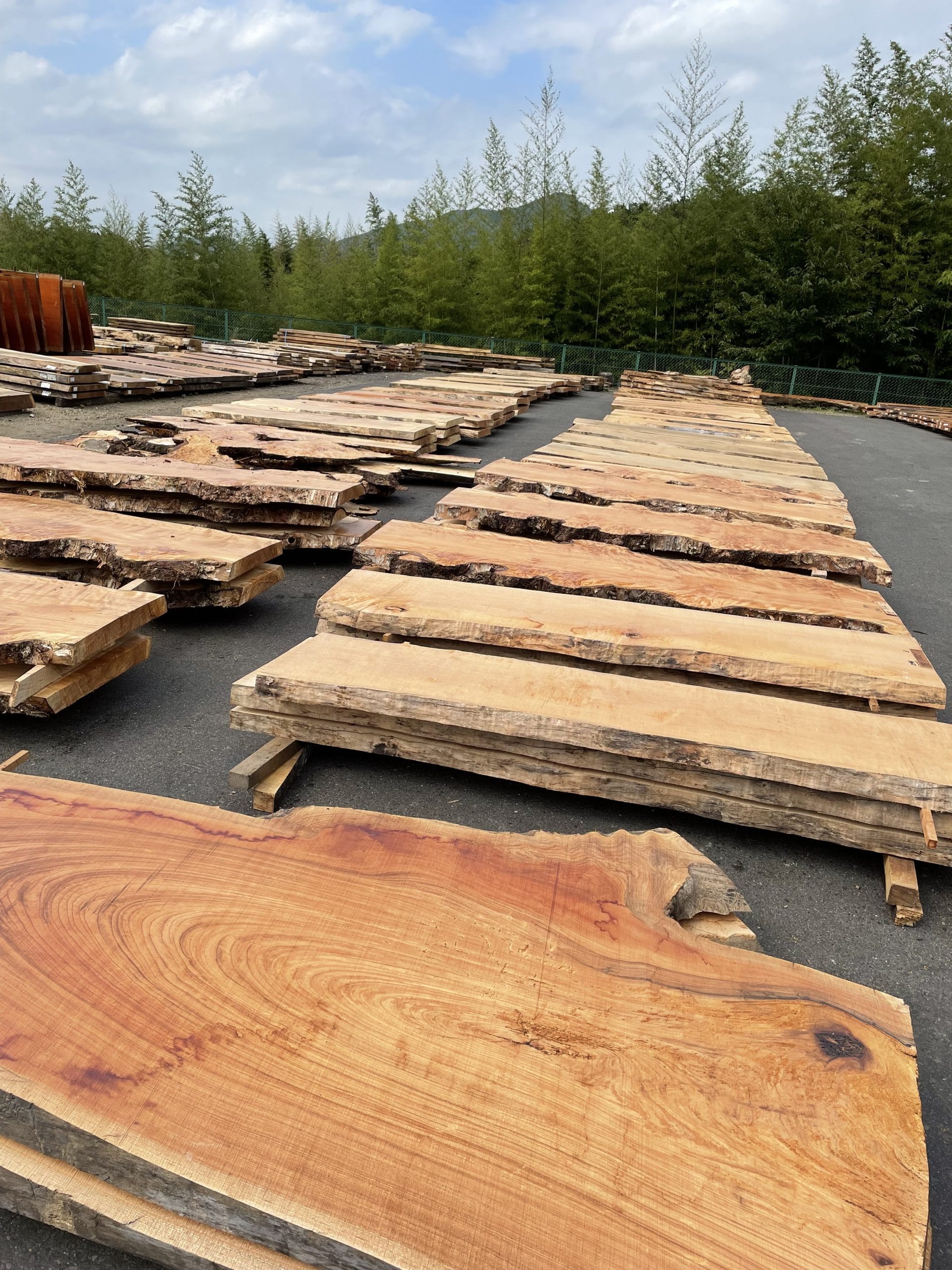
Even wood that looks the same can differ significantly depending on its origin, growth environment, and ring density. High-quality wood not only resists warping and splitting when dried, but it also showcases gorgeous grain patterns and rich color depth once finished.
This initial selection is a vital step in building the foundation for furniture that will last a lifetime.
3. Kidori (Planning the Cut)
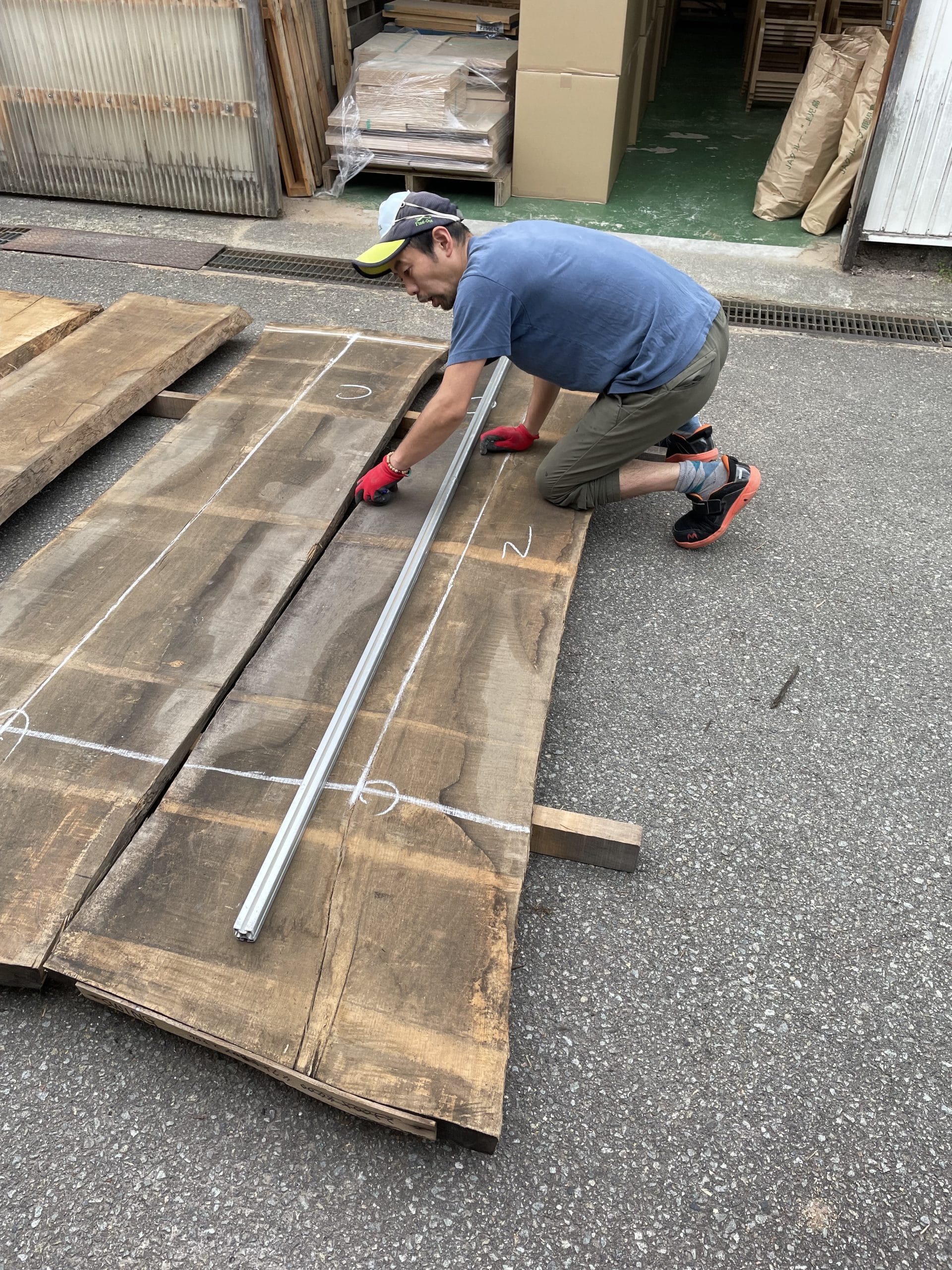
After the selected wood is thoroughly dried, we move on to “kidori,” the process of planning how each piece will be cut.
Keeping the final product in mind, we decide how to cut the wood so that no material is wasted and the resulting table or small item is as beautiful as possible. We consider the direction of the grain, the placement of knots, and the natural shape we want to highlight. Through experience and knowledge, we determine the best approach.
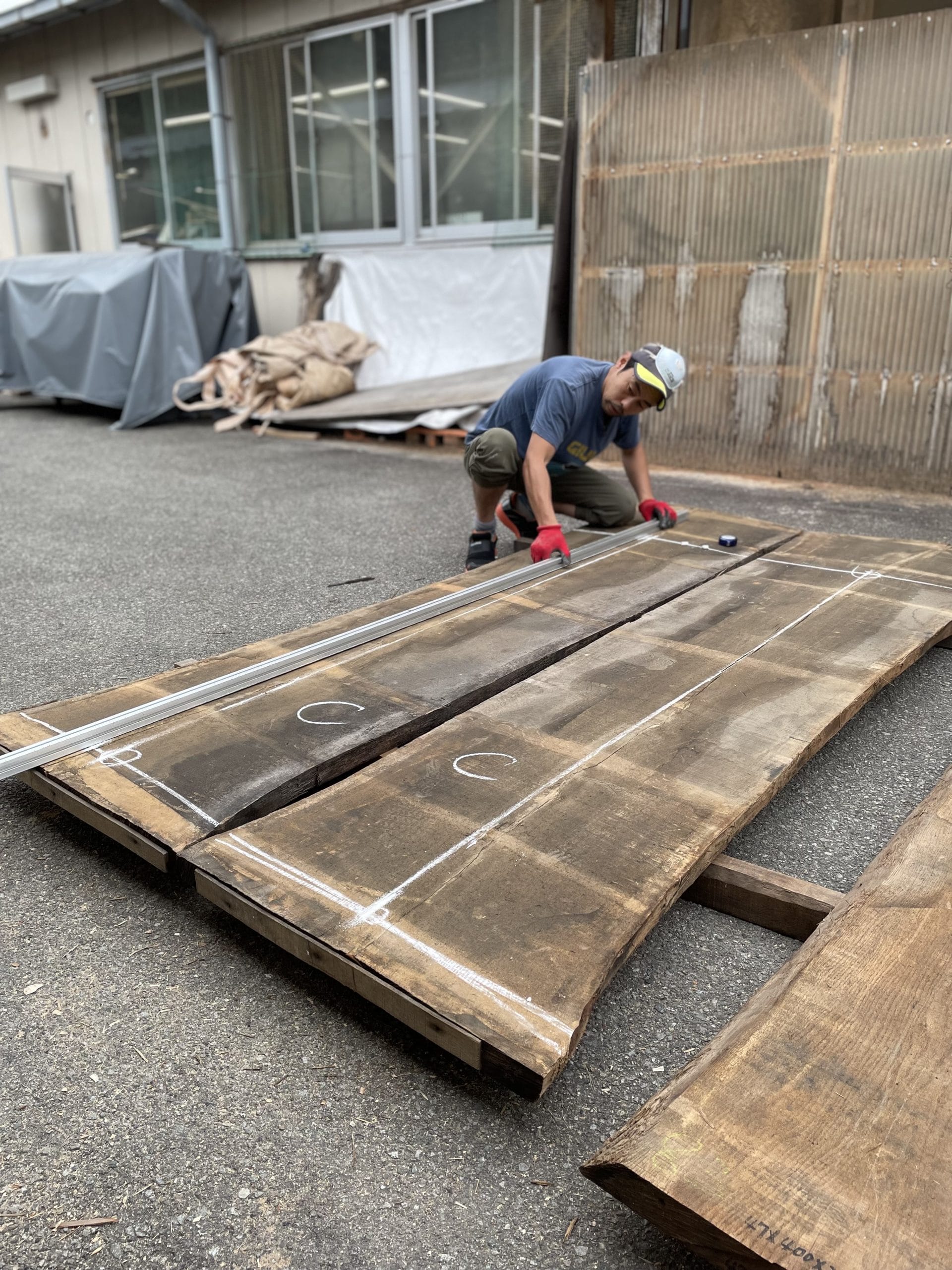
When it comes to large surfaces like dining tabletops—where knots and wood grain are more prominent—the decisions made during kidori have a huge impact on the finished look. It’s no exaggeration to say “this is where everything is decided.”
That’s why a veteran craftsperson relies on years of intuition and experience to carry out kidori without compromise.
4. Rough Cutting
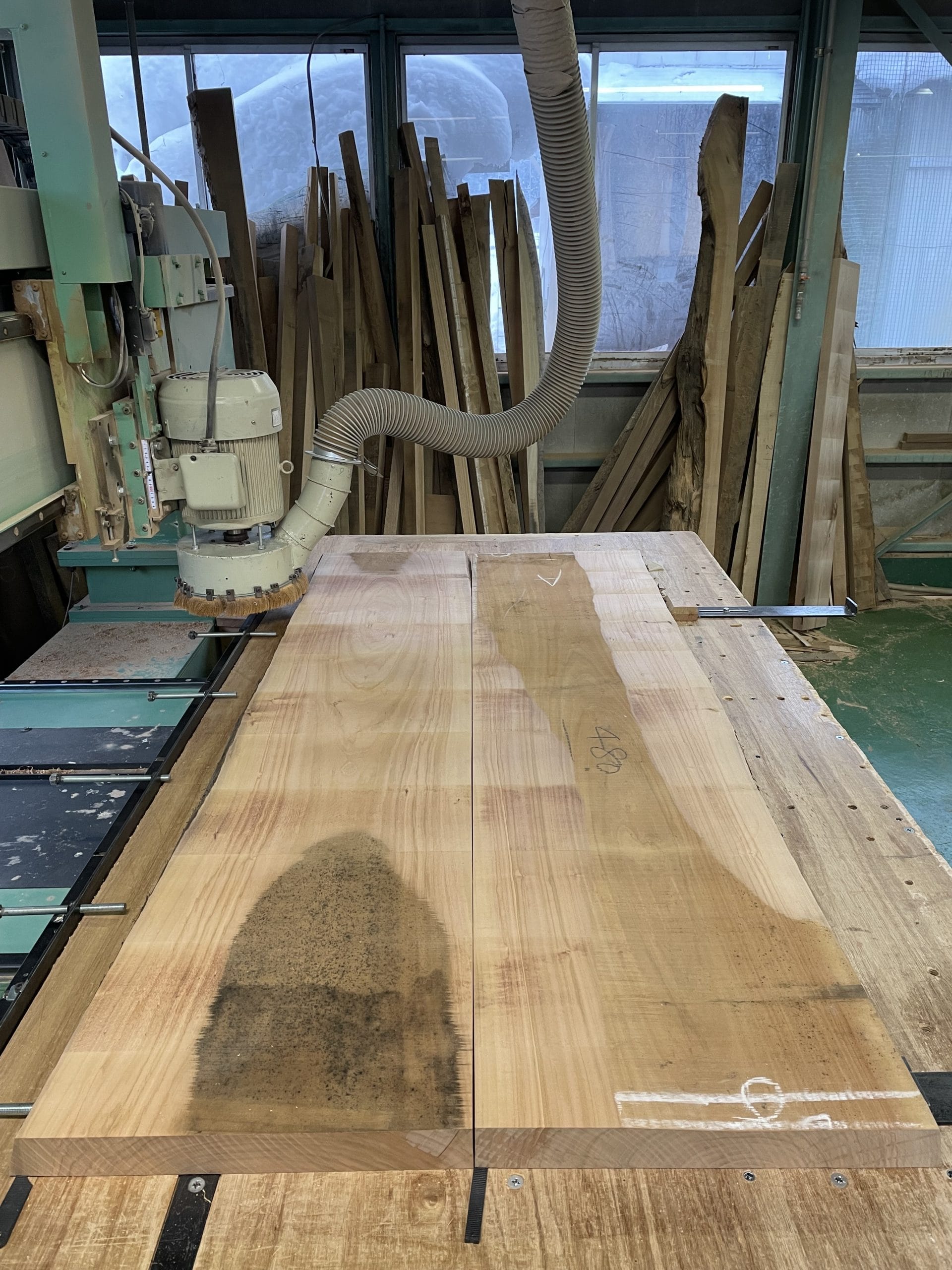
With the cutting plan set, we begin “rough cutting.”
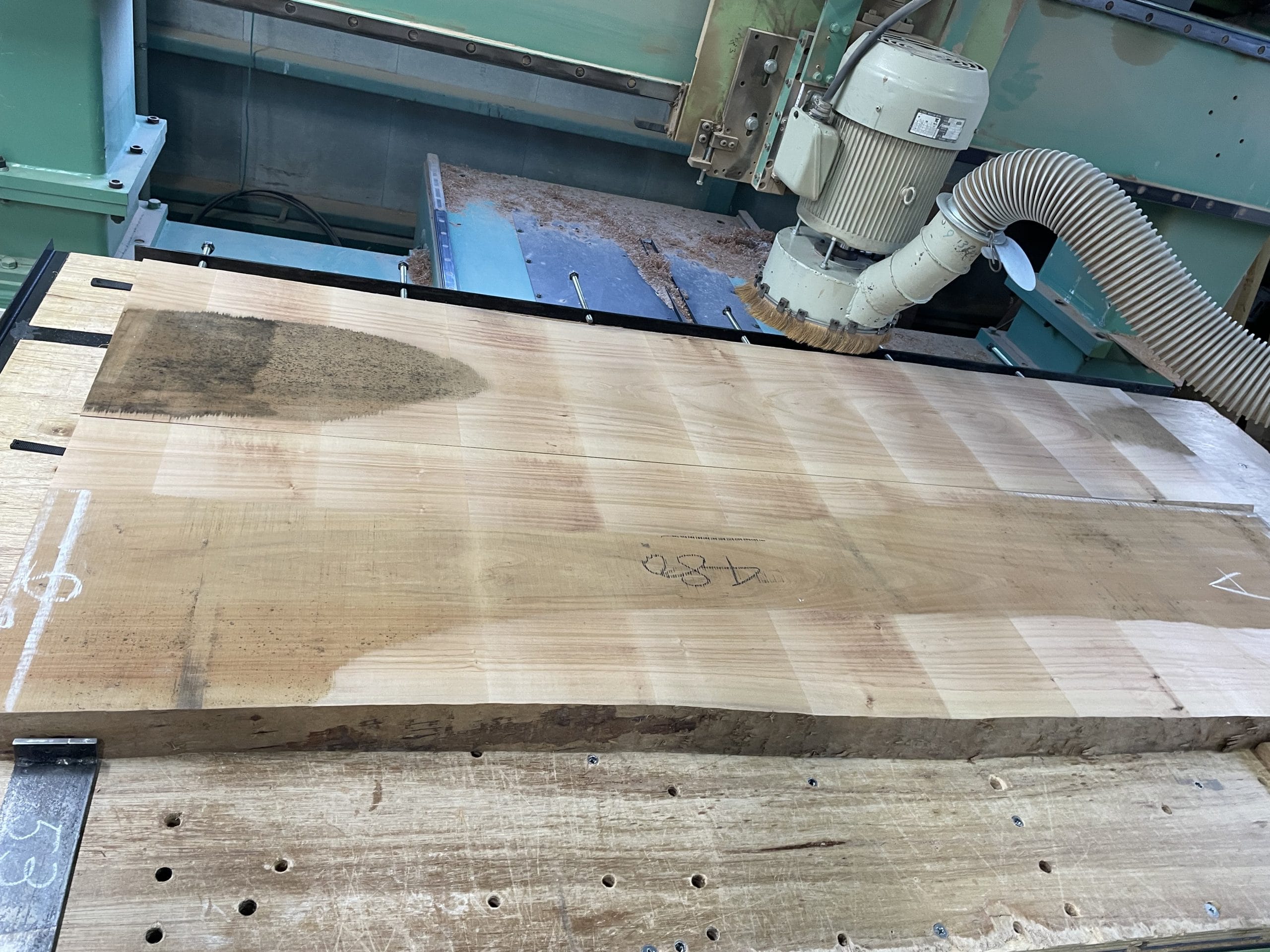
This involves cutting out pieces that are slightly larger than the final shape. Depending on the wood’s characteristics, we may use large machinery or work by hand.
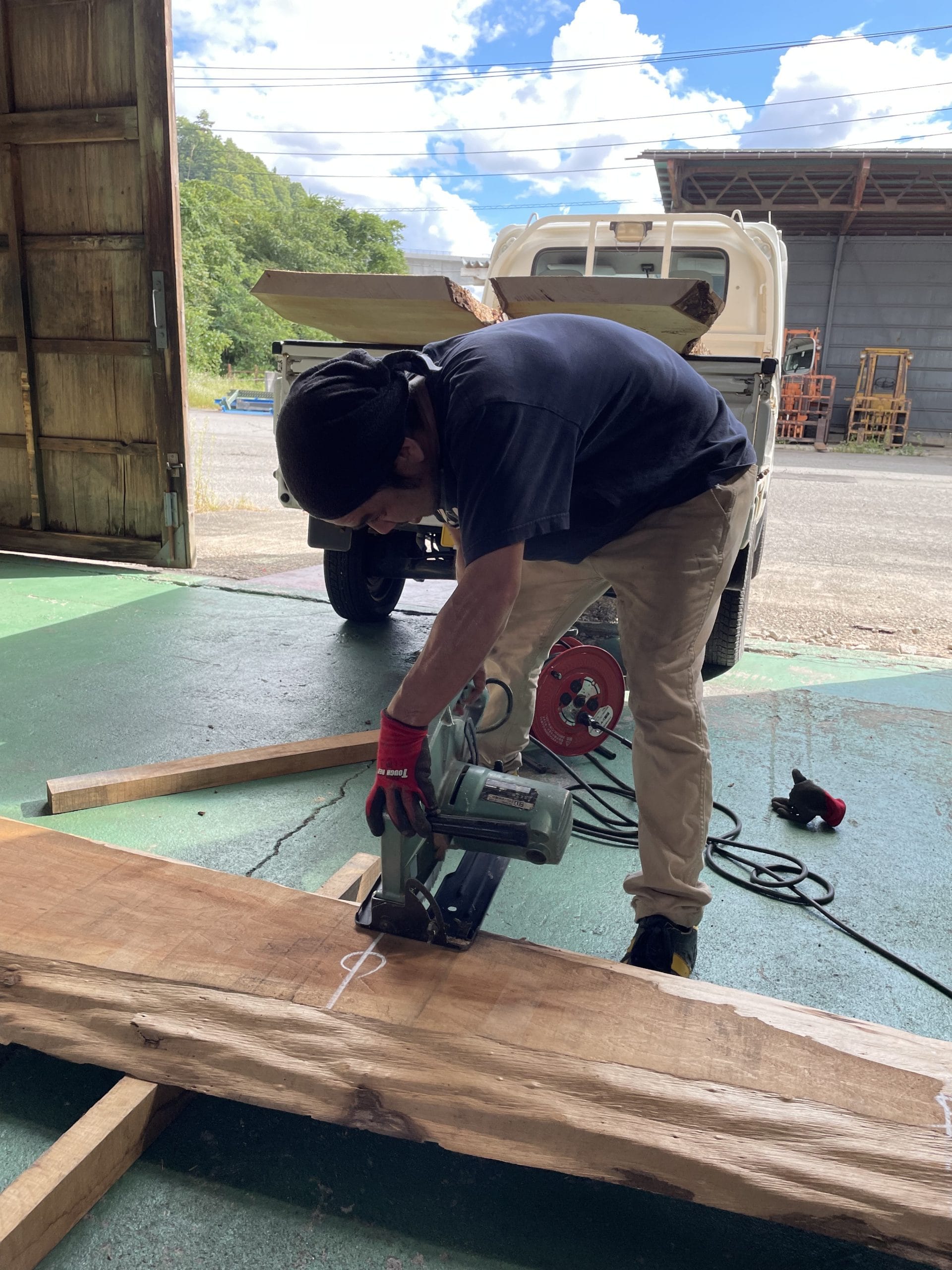
At this stage, the wood is still some distance from its final polished look. Yet, we’re steadily moving toward the finished design envisioned during kidori. By removing unneeded sections now, later steps—like bonding, further processing, and finishing—become smoother.
5. Joining (Bonding)
Next, we bond the rough-cut planks to form a larger, single board. Instead of just applying glue, we embed thin wooden “biscuits” into slots between the boards for added reinforcement.
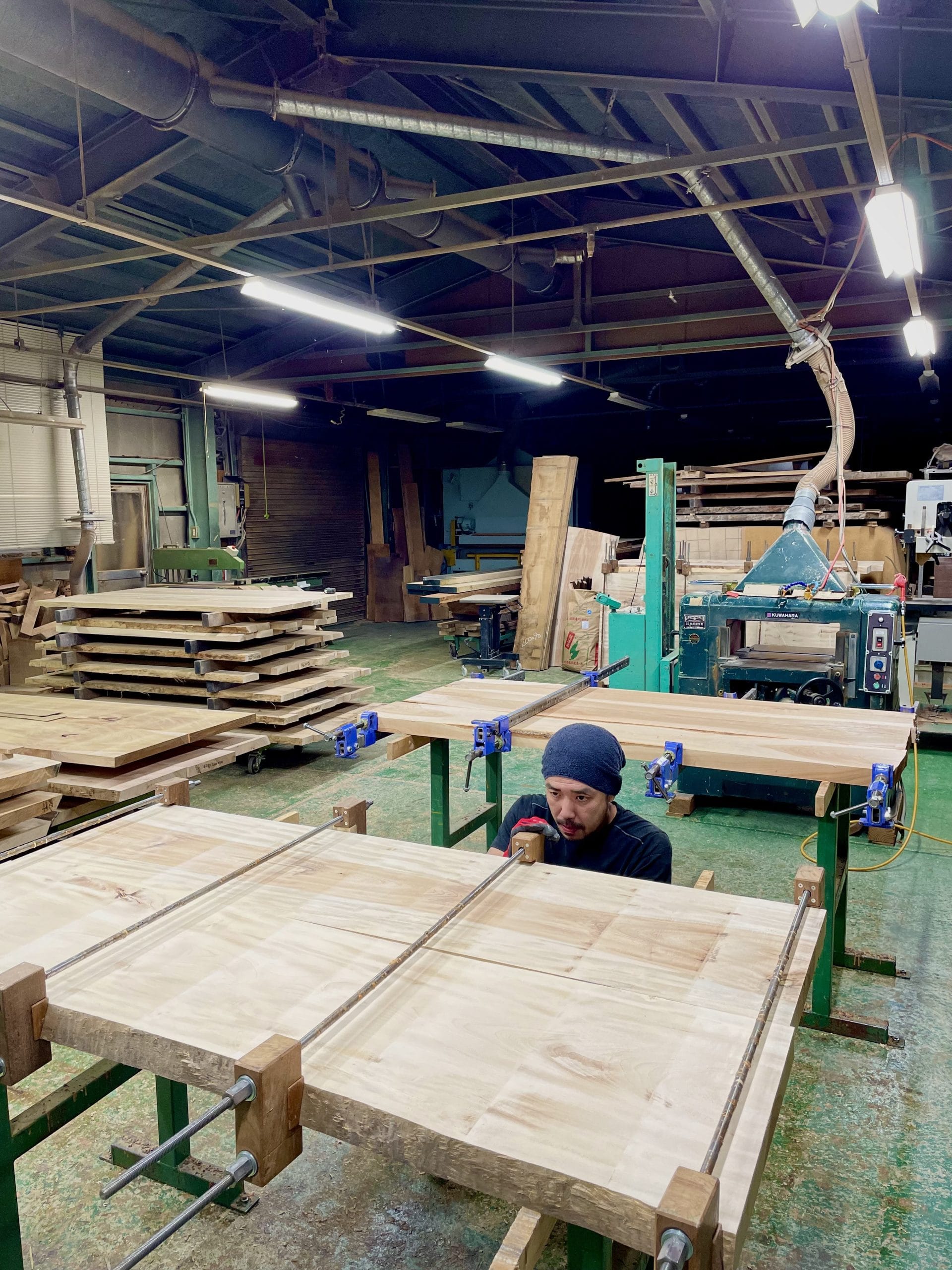
Then we use powerful clamps called hata-gane to press the planks together, forming one seamless panel.
At this stage, we pay close attention to the ideal temperature and timing for bonding. Wood is sensitive to changes in temperature and humidity, which vary by season and climate, so controlling these conditions is essential.
After bonding, we may fill small cracks or knots with resin and carefully monitor the wood to prevent warping. This level of detail ensures the furniture’s durability, beauty, and ability to serve you for decades.
6. Processing
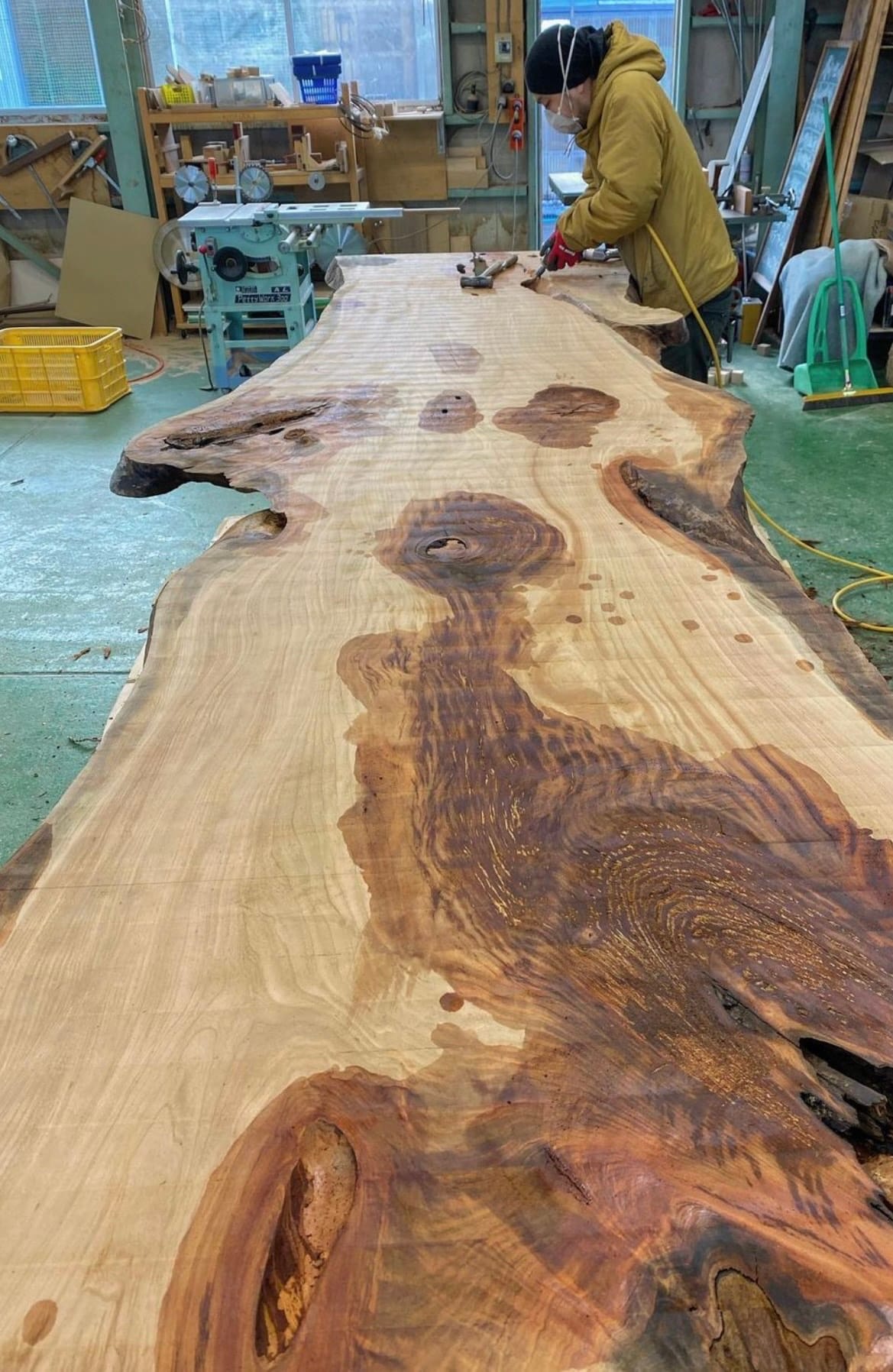
With the boards bonded, we begin “processing” to bring out the natural beauty of the wood.
Because solid wood offers such lovely grain, color, and scent, many Hida furniture designs remain intentionally simple, so as not to overshadow the material’s natural appeal.
We also try to keep the “live edge” of the wood—its original outer contours—whenever possible. Deciding which parts to trim and which to keep is a careful balancing act, carried out with both machinery and hand tools.
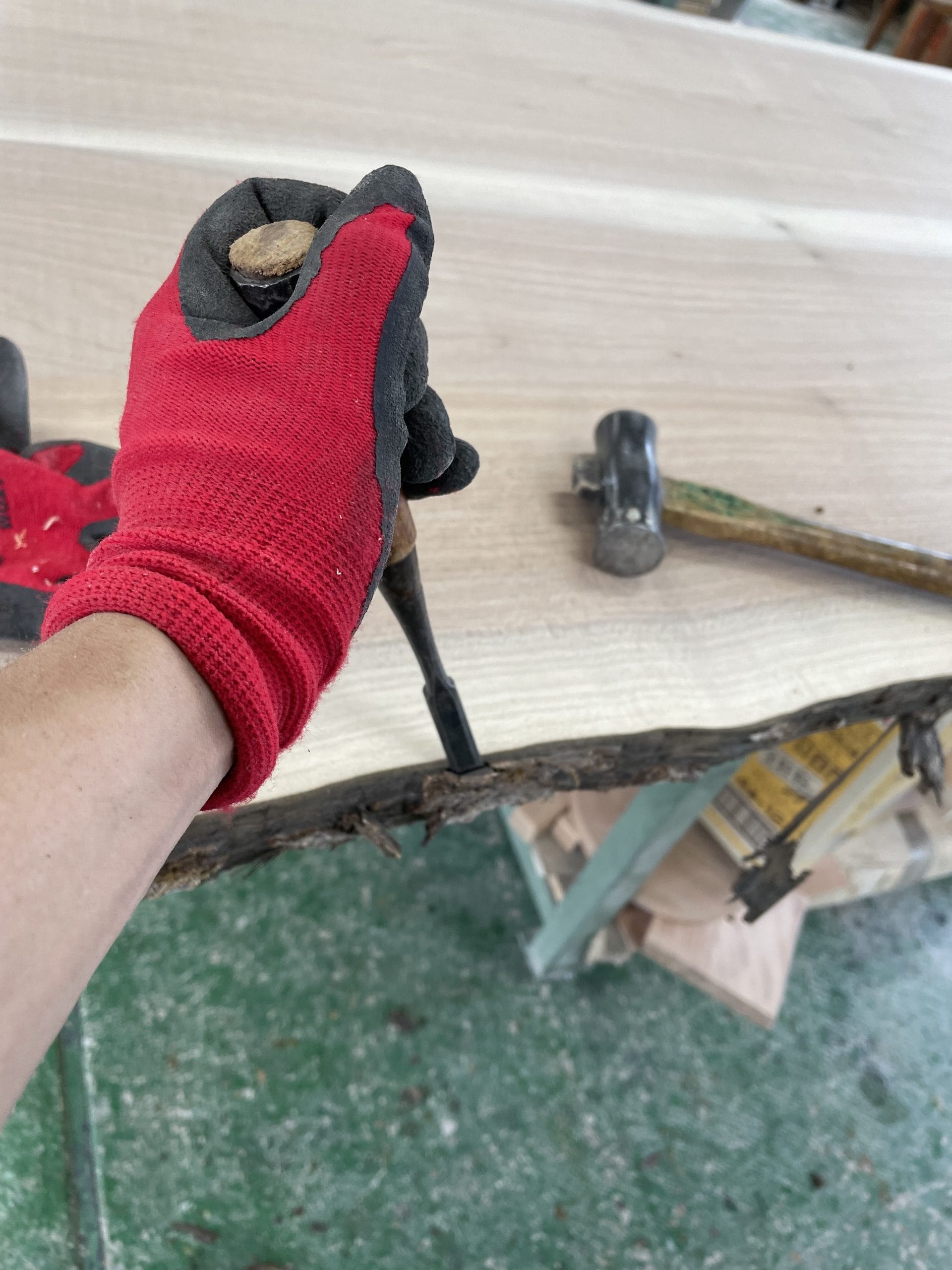
It’s a bit like cooking with the freshest ingredients: the higher the quality, the less you need to do. Too much intervention can even diminish the wood’s inherent charm.
7. Finishing
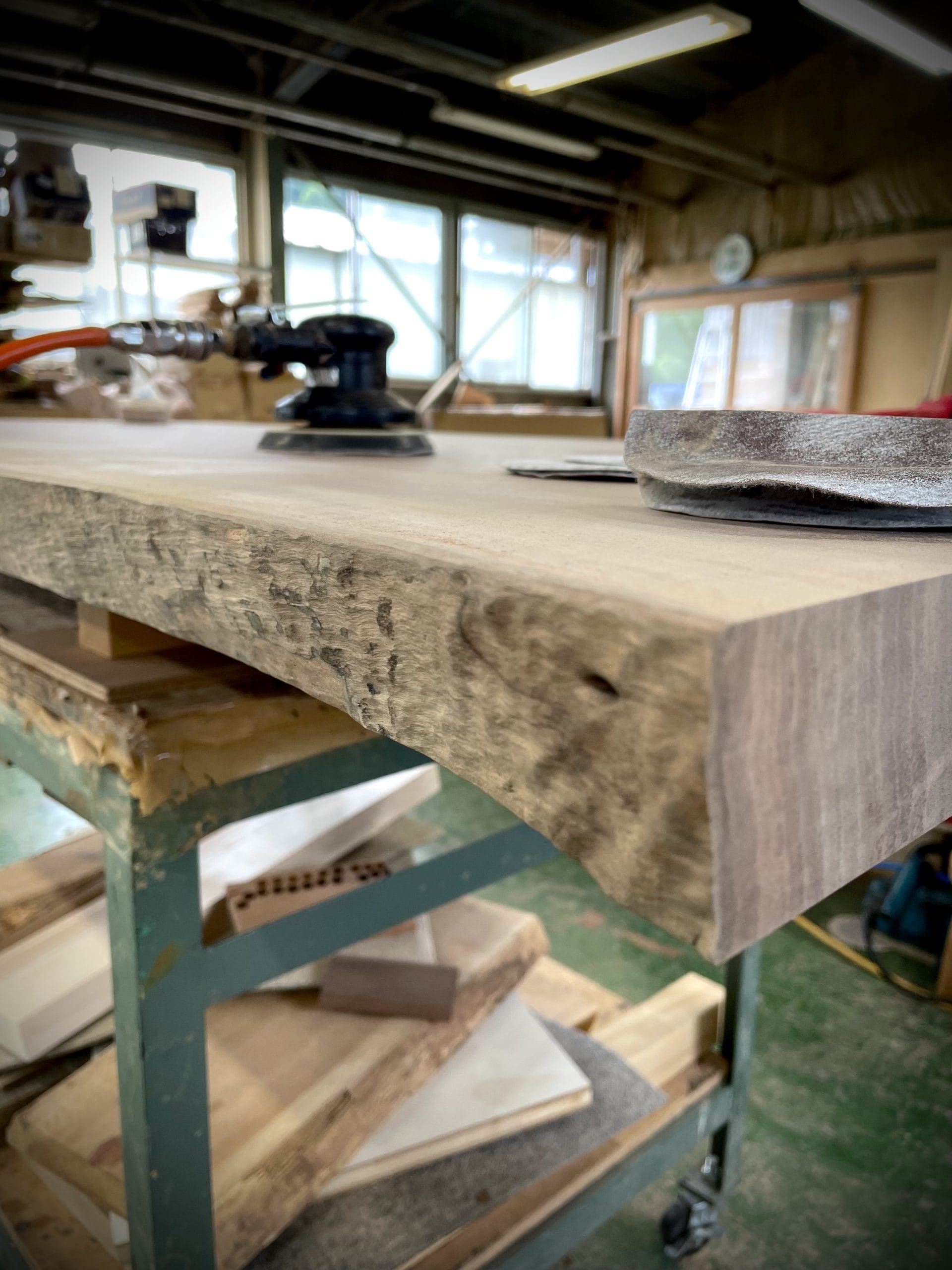
The final step, “finishing,” involves meticulously sanding the piece and then applying a uniform coat of finish in a specialized booth. A veteran craftsperson manages drying times, the number of coats, plus temperature and humidity, ensuring the grain stands out beautifully while also enhancing durability.
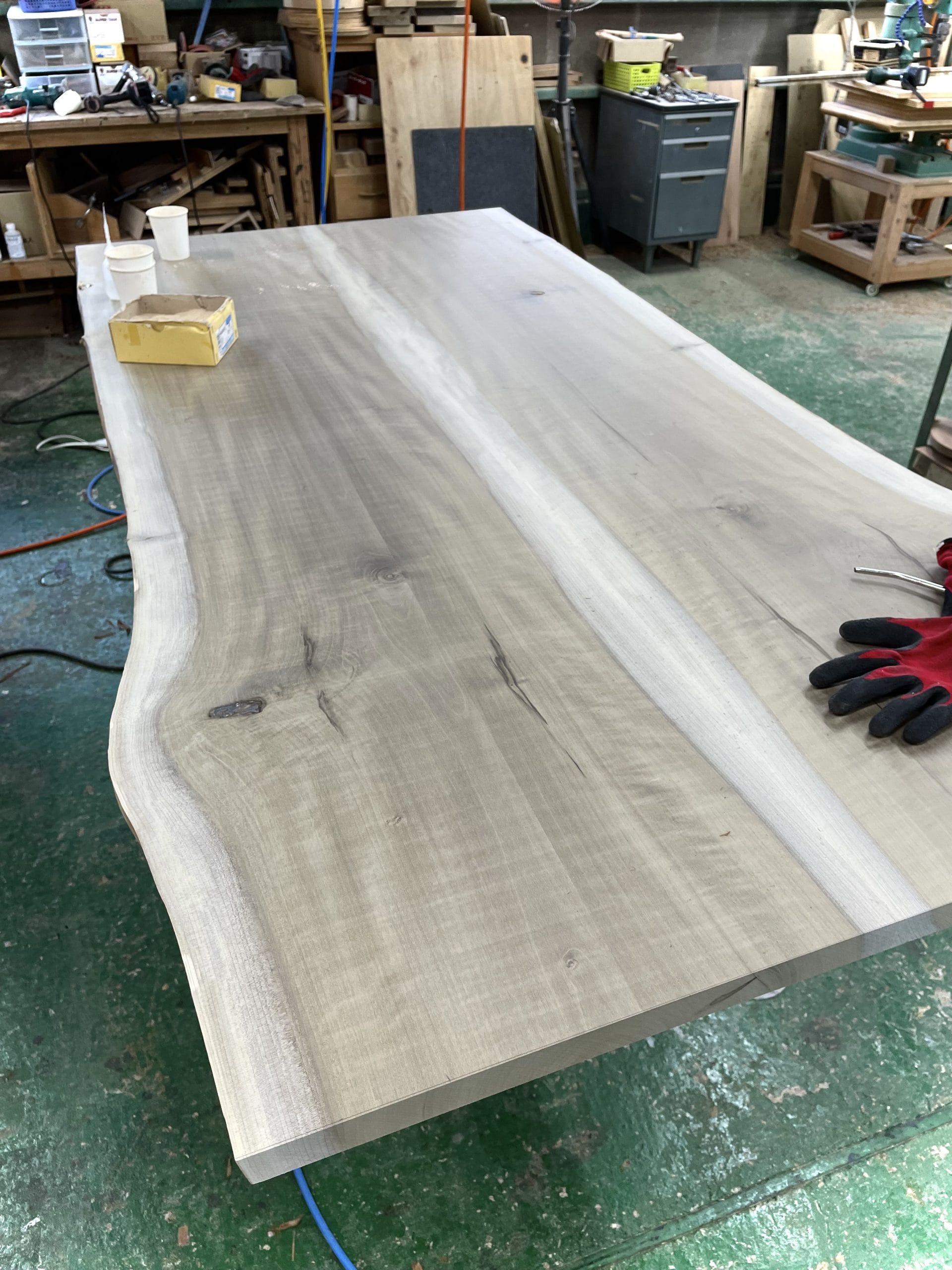
At Blue Leaf, we primarily use Cerawood finishing. This allows for easy care—like wiping with water—and prevents ring stains, meaning you can enjoy your furniture for years to come with minimal upkeep. Of course, we also offer oil finishes if you prefer. Feel free to consult us about your options.
Conclusion: A Lifetime of Furniture Shaped by an All-in-One Process
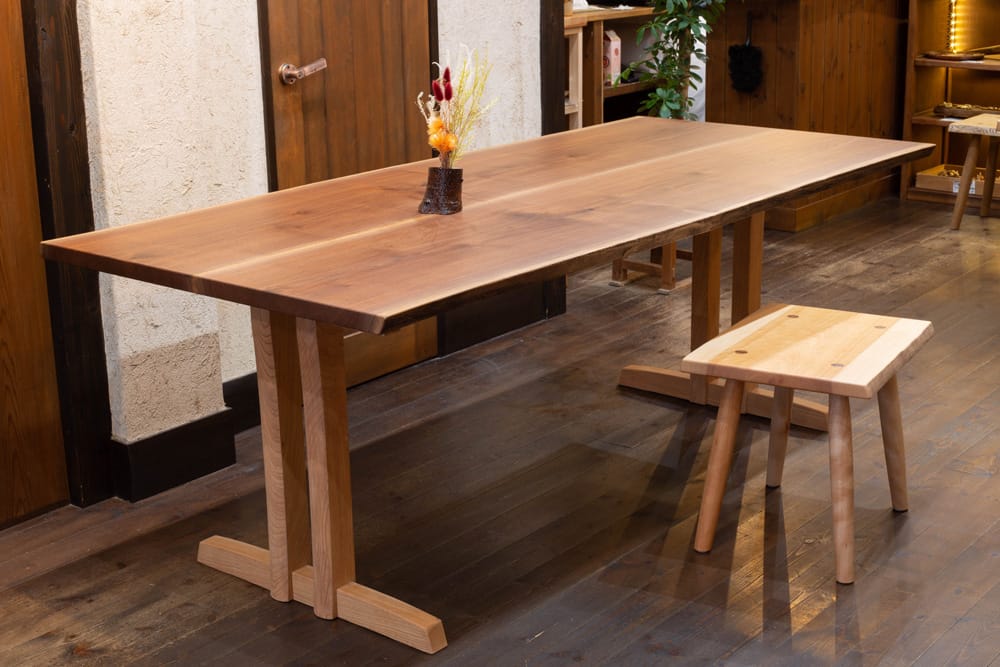
As you’ve seen, Hida furniture is created through a seamless process—every step from wood selection to finishing—all guided by uncompromising craftsmanship. It starts with procuring top-grade wood and proceeds through kidori, rough cutting, bonding, processing, and finally finishing. Only after these detailed steps do we arrive at a truly authentic piece of furniture.
Far from growing old-fashioned with time, solid wood furniture takes on ever deeper character and grace, continuing to enrich our lives for generations. Handcrafted with care and passion, these pieces carry a unique warmth and sense of distinction.
If you’re looking for truly outstanding tables or chairs, feel free to visit us anytime and experience Hida furniture for yourself. We look forward to welcoming you.
